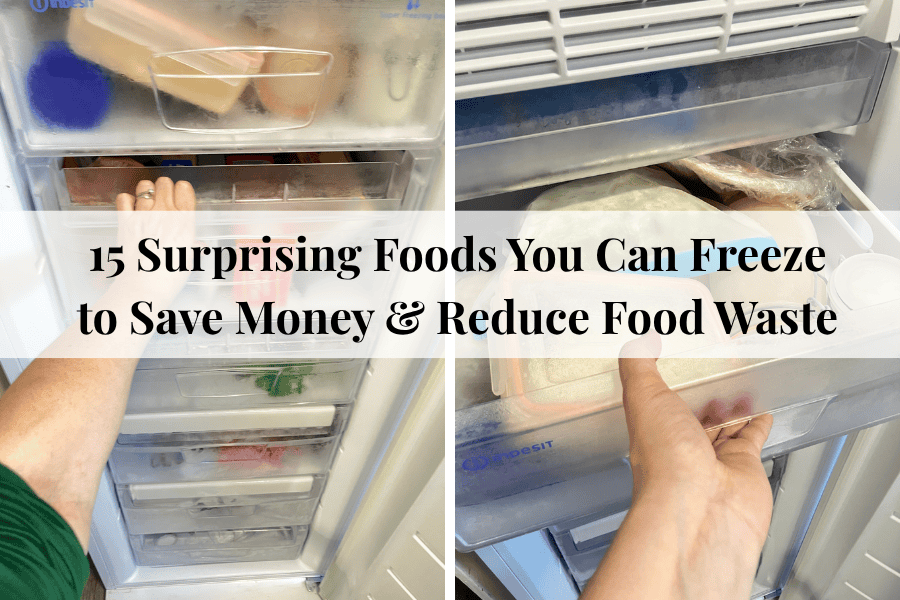
Freezing food before it goes to waste is a simple way to make your grocery budget stretch further.
If you have leftover ingredients, food approaching its use-by date or more of something than you can use, check whether it can be frozen before throwing it away.
During my no-spend year in 2017, I reduced our grocery spending by 50%. Making better use of food we had already bought was an important part of that. I still use my freezer regularly to save leftover ingredients and portions of food for another day.
Here are 15 foods you can freeze, how to freeze them, how to defrost them and how to use them afterwards.
1. Icing
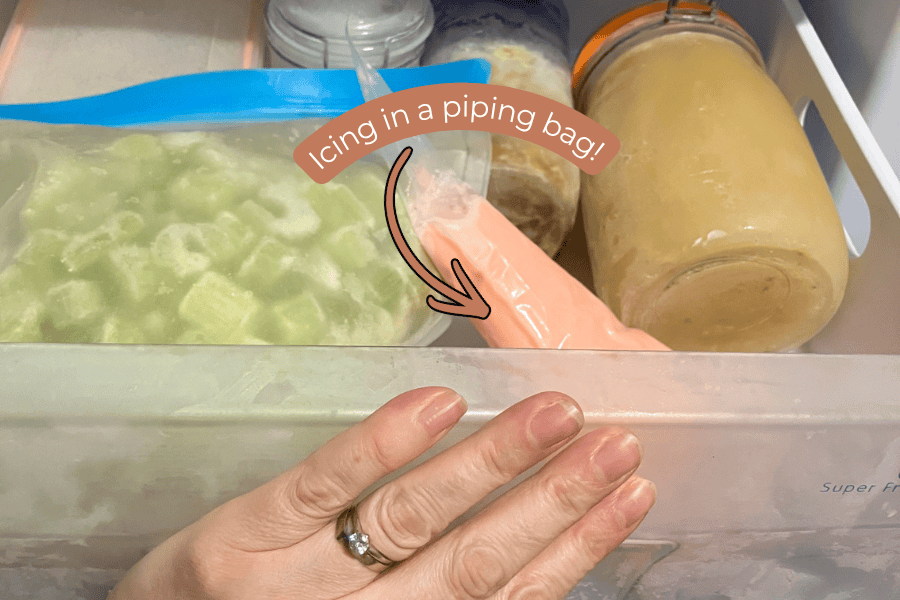
Leftover icing can be frozen and saved for your next batch of baking.
To freeze: I freeze leftover icing in an icing sleeve, ready to use again. Seal it well before putting it in the freezer.
To defrost: Put it in the fridge overnight. Once defrosted, allow it to come closer to room temperature before using it. Buttercream-style icing may need to be worked or whipped again to restore the texture.
Use it for: Cakes, cupcakes and other baking.
2. Coconut Milk
If you only use half a tin of coconut milk in a recipe, freeze the remainder.
To freeze: Pour it into a freezer-safe jar or container. Leave space at the top because the liquid will expand as it freezes.
To defrost: Put it in the fridge overnight. Coconut milk can separate after freezing, so stir it thoroughly once defrosted.
Use it for: Curries, soups, sauces and other cooked dishes.
3. Milk
Milk can be frozen if you aren’t going to use it before its use-by date.
To freeze: Freeze it in its original container if the packaging is suitable, or transfer it to a freezer-safe container. Leave enough space for the milk to expand.
To defrost: Defrost thoroughly in the fridge. A larger container may take longer than overnight. Once completely defrosted, shake it well because the milk can separate during freezing.
Use it for: Drinking, porridge, sauces, baking and cooking. If you find the texture has changed slightly, use it for cooking or baking.
4. Cheese
Cheese is particularly useful to freeze if you plan to cook with it afterwards.
To freeze: Grate the cheese and place it in a freezer bag or suitable container.
To defrost: Defrost it in the fridge if required. For many cooked dishes, grated cheese can be used directly from frozen.
Use it for: Cheese toasties, pizza, pasta, sauces, baked potatoes and other dishes where the cheese will be melted.
Freezing can change the texture, so it may not be as suitable for slicing and using cold in sandwiches afterwards.
5. Butter
Butter freezes well and can be used normally after defrosting.
To freeze: Freeze a whole pack or divide it into smaller portions first. Wrap or seal it well.
To defrost: Put it in the fridge for around 6–7 hours or overnight. If you need softened butter for baking, allow it to come to room temperature after it has fully defrosted.
Use it for: Spreading, baking, frying, sauces and general cooking.
6. Hummus
Hummus can be frozen if you aren’t going to finish an open tub.
To freeze: Transfer it to a suitable airtight container and leave a little space for expansion.
To defrost: Put a small portion or supermarket-sized tub in the fridge overnight.
The hummus may separate slightly after freezing. Stir it thoroughly once it has defrosted. If necessary, add a small amount of olive oil or lemon juice and stir again.
Use it for: Dips, sandwiches and wraps.
7. Ginger
Fresh ginger can be frozen and used directly from the freezer.
To freeze: Freeze pieces of ginger whole, or chop or grate it and freeze it in small portions.
To defrost: You usually don’t need to. Grate whole ginger while frozen or add prepared portions directly to a cooked dish.
Use it for: Curries, stir-fries, soups and sauces.
8. Garlic
Garlic can also be prepared and frozen in small portions.
To freeze: Freeze peeled cloves, chopped garlic or crushed garlic. You can portion prepared garlic into an ice cube tray and transfer the frozen portions to a freezer bag or container.
To defrost: If the garlic is going into a cooked dish, add it directly from frozen.
Use it for: Curries, casseroles, soups, pasta sauces and other cooked dishes.
9. Tomato Purée
Small amounts of leftover tomato purée are easy to freeze.
To freeze: Spoon the purée into an ice cube tray and freeze. Once solid, transfer the portions to a labelled freezer bag or container.
To defrost: There is usually no need to defrost it first. Add a frozen portion directly to the dish while cooking.
Use it for: Bolognese, chilli, casseroles, soups and tomato-based sauces.
10. Pesto
If you have pesto left in a jar, freeze it before it spoils.
To freeze: Freeze small amounts in an ice cube tray, then transfer the frozen portions to a freezer bag or container. If you want to use a larger amount together, freeze it in a suitable container instead.
To defrost: Small portions can be added to cooked dishes. For a larger portion, put it in the fridge overnight and stir thoroughly once defrosted.
Use it for: Pasta, sauces, cooked vegetables and other dishes where you would normally use pesto.
11. Mashed Potato
Leftover mashed potato can be portioned and frozen for another meal.
To freeze: Allow it to cool, divide it into meal-sized portions and transfer it to suitable freezer containers.
To defrost: Put the portion in the fridge overnight and allow it to defrost thoroughly.
Reheat until piping hot throughout. Stir well and season again before serving. Adding a little butter or milk while reheating can help restore the consistency.
Use it for: A side dish, cottage pie, shepherd’s pie or other meals requiring mashed potato.
12. Gravy
Leftover gravy can be frozen rather than thrown away after a meal.
To freeze: Allow it to cool and transfer it into a suitable container. Freeze it in portions that match the amount you normally use for a meal.
To defrost: Put it in the fridge overnight and allow it to defrost thoroughly.
Reheat until piping hot throughout, stirring well as it heats.
Use it for: Roast dinners, sausages and mash, pies or other meals served with gravy.
13. Cake
Cake can be frozen whole or in individual portions.
To freeze: Cut leftover cake into portions and wrap or store each piece well. Freezing individual slices allows you to remove only what you need.
To defrost: Remove a slice from the freezer and leave it covered while it defrosts. Individual slices will usually defrost within a few hours at room temperature. Larger pieces and whole cakes will take longer.
Use it for: Once completely defrosted, serve as you normally would.
If the cake contains fillings or toppings that require refrigeration, defrost it in the fridge instead.
14. Bread
Freezing bread is an easy way to stop part-used loaves going stale.
To freeze: Freeze sliced bread in its original packaging if suitable, or transfer it to a freezer bag. You can also freeze rolls, wraps and other breads.
To defrost: Individual slices generally defrost at room temperature within a couple of hours. Many types of sliced bread can also be toasted directly from frozen.
Use it for: Sandwiches once defrosted, toast, breadcrumbs, bread pudding and other recipes using bread.
15. Soup
Homemade soup can be frozen in portions so you only need to defrost the amount you intend to eat.
To freeze: Allow the soup to cool and transfer it to suitable freezer-safe jars or containers. Leave plenty of space at the top because the soup will expand as it freezes.
To defrost: Put a portion in the fridge overnight and allow it to defrost thoroughly.
Reheat until piping hot throughout. Stir it well as it heats to bring the ingredients back together and restore the consistency.
Use it for: Lunches, light dinners or as part of a larger meal. Freezing individual portions makes it easy to take out exactly what you need.
Freeze Food Before It Becomes Waste
The useful habit is simple: when you have food you aren’t going to use in time, check whether you can freeze it.
Half a tin of coconut milk, leftover icing, a few scoops of mashed potato or the end of a jar of pesto may not seem worth much individually. Over time, however, repeatedly throwing away small amounts of food adds to your grocery spending.
Freeze food while it is still suitable to eat, label it clearly with the contents and date, and use it in a future meal.
Before writing your next shopping list, check your freezer as well as your fridge and cupboards. You may already have some of the ingredients you were planning to buy.
For more information about freezing fresh produce, read my [guide to vegetables you can freeze and how to prepare them].
[Find out more about How to Save Money on Groceries and Reduce Food Waste.]