11 Tips On How To Meal Plan On A Budget
It is the never ending job! But let’s face it, meal planning and budgeting is a necessity as most of us cannot afford to just ‘wing it’ all week. It can get expensive, create food waste and leave you trying to work out dinner at the end of an already busy day.
A good meal plan does not need to be complicated or full of new recipes. It just needs to fit your budget, your family and the time you actually have. The aim is to make shopping easier, waste less food and take some of the mental load off your shoulders.
Here are my 11 tips for meal planning on a budget:
-
- Start With the Meals Your Family Already Eats
- Plan for Your Lifestyle
- Give Each Night a Theme
- Check What You Already Have Before You Shop
- Keep a Small List of Emergency Meals
- Plan a Use-It-Up Night
- Cook Once, Eat Twice
- Meal Plan to Fit Your Budget
- Shop With a List
- Put Your Meal Plan Where You Can See It
- Be Flexible With Your Meals
Track you grocery spending with this FREE spreadsheet-Link under image!
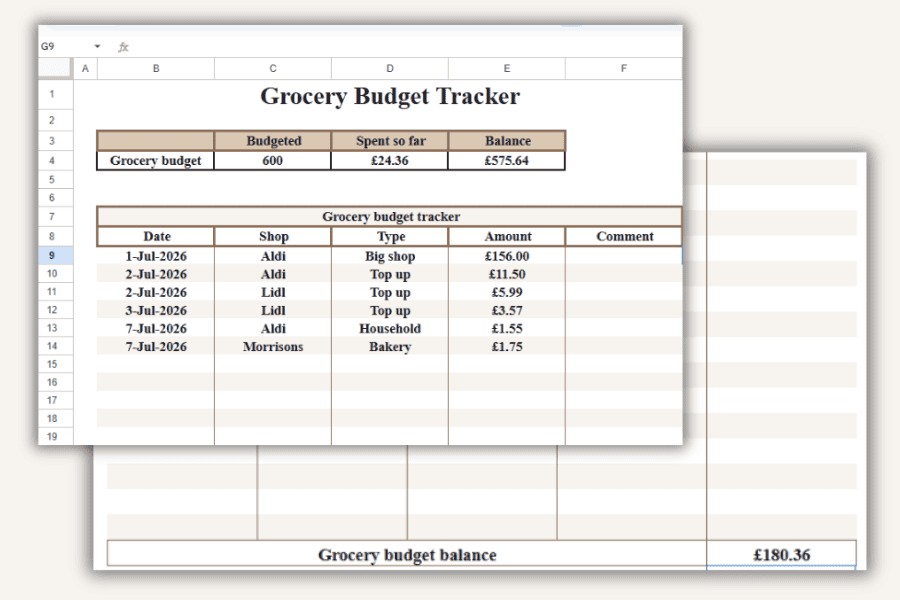
FREE GROCERY BUDGET TRACKER HERE
1. Start With the Meals Your Family Already Eats
Meal planning does not mean learning loads of new recipes. They are two separate things. A meal plan is simply your way of working out what is for dinner before you are tired, hungry and staring into the fridge after a long day.
Start with the meals you already make regularly. Think about the dinners that suit your grocery budget, are easy enough to prepare and are generally accepted by the people you are feeding. These are the meals that will form your core meals list, which is the foundation of your meal plan.
Here are a few from my own list:
- Spaghetti Bolognese
- Chicken curry
- Chilli con carne
- Irish stew
- Roast dinner
- Egg and chips
Your list might look completely different, and that is fine. The meals only need to work for your household.
Once you have your main list, you can sort meals into helpful categories such as quick meals, slow-cooker meals, freezer meals, mince meals, meat-free meals, weekend meals and easy breakfasts. Having these meals written down makes meal planning and grocery shopping much easier because you are choosing from meals you already know will work.
Save new recipes for a quieter weekend or an evening when you actually fancy cooking. One new meal a month is plenty when you are getting your meal-planning system in place.
2. Plan for Your Lifestyle
A meal plan should reflect your actual week, not an ideal version of it.
Most of us are juggling jobs, children, after-school clubs, appointments, older parents, housework and being the family taxi service. Have a look at what is already happening before you decide what to cook. If you know you have a late shift, football training or an evening appointment, that is not the night to plan a meal with lots of prep and washing up.
This matters for your grocery budget too. You might fancy cooking something a bit more exotic, but if you do not have the time, you can end up wasting ingredients as well as your effort. Save new recipes for a quieter weekend if you enjoy cooking. It can be a lovely bit of fun when you are not trying to get dinner on the table in a rush.
Put your quickest meals on the busiest days. This could be a freezer dinner, a traybake, something from the slow cooker, pasta with a simple sauce or a meal made from cupboard ingredients.
Save meals that take a little longer for quieter evenings or weekends. You do not need to plan as though you are Nigella Lawson, although I loveee <3 that woman’s food. A meal plan works best when it fits the time and energy you realistically have.
3. Give Each Night a Theme
Giving certain nights a loose theme can make meal planning much easier, especially when you are just getting started. For example, you might have pasta on Monday, a slow-cooker meal on Tuesday, a freezer dinner on Wednesday, a family favourite on Thursday and fakeaway night on Friday. The weekend can be left more flexible for a roast, batch cooking or whatever suits your plans.
I find this gives me somewhere to start when I am filling in the meal plan. It is particularly helpful in winter, as the slow cooker can take care of so many easy meals while you get on with the rest of the day. If I know Wednesday is always busy, I can make that an easy dinner night without having to think about it again every week.
You do not have to use themed nights all the time. They are especially helpful when you know a busy period is coming up and want to make the week feel a little more organised.
Themes can help with your grocery budget too. If you plan a couple of meals using mince, chicken or similar vegetables, you can buy larger packs and use them across the week rather than buying lots of unrelated ingredients.
4. Check What You Already Have In Before You Shop
One of the easiest ways to reduce food waste is to check what you already have before writing your shopping list.
Have a quick look in the fridge, freezer and cupboards. You do not need a perfect inventory every week, but make a note of anything that needs using soon. This could be vegetables in the fridge drawer, open packets, yoghurt, cheese, bread, cooked meat or freezer food that has been sitting there for a while.
I find that once I have had a proper look, I can usually make one or two meals from food I already have. A bag of carrots, onions and potatoes might become a stew, soup or traybake. Leftover chicken can go into wraps, pasta, curry or a pie. A few odds and ends of vegetables can be used in fried rice, omelettes or a pasta sauce.
Shopping from your existing food first helps you spend less and makes the food you buy work harder. It also stops the fridge becoming a place where good intentions quietly go to waste. If you can make this a regular part of your meal planning, you should start to see savings on your grocery bill.
5. Keep a Small List of Emergency Meals
We all have those evenings when nothing goes to plan and the first thing that comes to mind is, “Takeaway.” Maybe you forgot to defrost something, got home late or simply do not have the energy for the meal you had planned.
Keeping a few easy meals in the cupboard, fridge or freezer can save the day. Frozen pizzas with wedges, sausage, beans and chips, or pasta with pesto and cheese are all filling options that can be made quickly. They are also made from ingredients you can keep in without worrying that they will go off quickly.
It is worth having a few convenience options in mind too. A cooked chicken, microwave rice and a bag of salad may cost more than cooking from scratch, but it is still likely to be far less of a budget disaster than an unplanned takeaway. Takeaways are so expensive these days, especially when you are feeding a family.
6. Plan a Use-It-Up Night
Food waste is difficult to avoid completely, so a regular use-it-up night can make a real difference.
Choose one evening each week to look at what is left in the fridge and make dinner from it. It does not all have to be the same meal, by the way. This could be leftovers served with salad, a pot of mash or some crusty bread. It could be a picky tea where everyone chooses from small portions and fills their plates. We all love a picky tea, don’t we?
You do not need to decide in advance exactly when this meal will happen. It is often easier to keep it flexible. When you notice you have enough leftovers or ingredients that need using, swap that evening’s planned meal with another one later in the week.
A use-it-up night saves food, but it also gives you a break from cooking a full meal from scratch. That makes it a useful part of the plan even when your fridge is not especially full.
7. Cook Once, Eat Twice
I like to think of leftovers as an investment in my future self’s time. If I am already cooking dinner, making a little extra is one of the easiest ways to simplify meal planning and help my grocery budget go further.
For example, if you are making Bolognese sauce, make enough for two dinners. Have it with spaghetti one night, then turn the rest into a lasagne the next day with white sauce, pasta sheets and cheese. A large chilli can feed the family once and leave a portion for the freezer, which I like to think of as a little treasure chest of future dinners.
You can do the same with curries, stews, casseroles and cooked chicken. Saucy meals are especially useful because they are easy to turn into something different. A mince sauce can become pasta, cottage pie, lasagne or loaded jacket potatoes. A whole roast chicken can stretch into sandwiches, wraps, soup or a pie.
You are getting more meals from ingredients you have already bought, which helps your grocery budget. It also gives you an easier dinner later in the week, when you may not have the time or energy to cook from scratch.
8. Meal Plan to Fit Your Budget
A grocery budget is not about making every meal as cheap as possible. It is about being realistic about what your household can comfortably spend on food, cleaning and laundry each month.
If you do not already have a budget, look back through a few months of receipts or bank statements. Work out your average weekly or monthly spend, then decide whether that number is working for you. As a rough starting point, you could try £100 per person, per month for groceries, cleaning and laundry products, then adjust it to suit your household.
It is worth looking at each part of your shop honestly. Are you buying branded cleaning products when an own-brand version would do the same job? Some branded products are worth paying for, but switching to cheaper laundry products can save a surprising amount over the year.
The same applies to food. Can you afford steak every week, or would a good-quality burger dinner twice a month work better? Could you buy a whole chicken instead of chicken breasts and use it for a roast, sandwiches and a curry? Could one meat meal be replaced with eggs, beans, lentils or a mince-based dinner?
You do not need to remove every treat or buy the cheapest version of everything. Just ask whether each item is giving you enough value for the money you are spending. Once you know your budget, meal planning becomes easier because some of the decisions are already made for you.
9. Shop With a List
A shopping list is one of the easiest ways to keep your grocery spending under control. Once you have checked what you already have in the house and written your meal plan, add the items you need for those meals to your list. After that, add your usual breakfast, lunch, snacks and household bits.
A tip I highly recommend, having learned the hard way, is not to shop hungry or without making your meal plan first. That is when I have found myself coming home with food that looked lovely in the shop but did not really fit into my week at all. In my opinion, this is a real money waster.
There is no harm in leaving yourself a little flexibility, though. If you spot meat, vegetables or bread your family will actually use on a special offer, for example, it may be worth swapping one of your planned meals around to make the saving.
10. Put Your Meal Plan Where You Can See It
And, for that matter, where everyone else can see it too.
Keeping your meal plan visible is one of the best ways to reduce food waste. Wasted food is money in the bin, so it helps when everyone knows what needs eating and what is planned for dinner.
I use my Four-Week Meal Planning System to organise our meals, but I also put that week’s plan on the fridge for everyone to see. It means nobody has to ask me what is for dinner every night. More importantly, it helps everyone in the house stay on the same page and makes it easier for them to help.
If we are having freezer trash for dinner that night, yes, that is on my meal plan, older children and other adults can get on with making it without much input from me. If leftovers are planned, such as lasagne, everyone can reheat their own portion, especially if adult children are working late.
Make this as easy on yourself as you can. It is not always simple when children are little, but teach them as they grow that they can cook and that their help is appreciated. A visible meal plan makes it easier for everyone to take some responsibility for dinner, while helping you use up the food you have already bought.
11. Be Flexible With Your Meals
A meal plan is there to help you, so allow enough flexibility for it to suit your life and support your goals of saving time and money.
If there are vegetables that need using before the ones planned for that night’s dinner, pivot. Swap meals around so you can avoid food waste. Equally, if you get delayed one evening, choose one of the easier dinners you had planned for another night. Some nights, nobody will fancy what was planned, so simply pick another meal from the week.
The meal plan has still done what you needed it to do by making sure everyone if fed.
That’s A Wrap..
Pardon the food related pun..🌮
Click here for your FREE Grocery Budget Tracker
Go here for free meal planning printables
Click here for budget friendly recipes
Go here to join us over on Instrgram
Sign up below for the newsletter ( I will send you a free book on stocking up on a budget)
Thanks for reading and I hope you enjoyed it.