How Much Should I Spend on Groceries?–Use the free workbook to calculate a realistic grocery budget for your household.

How much should you spend on groceries? Every household is different, but I use £100 per person per month as a starting point.
For example, a household of five would begin with £500 per month. You can then adjust this amount to reflect dietary needs, food preferences, local prices, pets and other household costs.
I must stress at the start of this post that the £100 rule it a rule of thumb and not gospel! It is just a starting point…
What we will cover in this post:
- Decide what your grocery budget will cover
- Calculate your starting figure
- Analyse your current spending
- Work out the meals and supplies your household needs
- Check current grocery prices online
- Find ways to spend more efficiently
- Choose your monthly grocery budget
- Test your budget for one month
Use the free Work Out Your Grocery Budget Guide alongside this guide to calculate your own figure.
Work Out Your Grocery Budget-EBook w Blog post combo 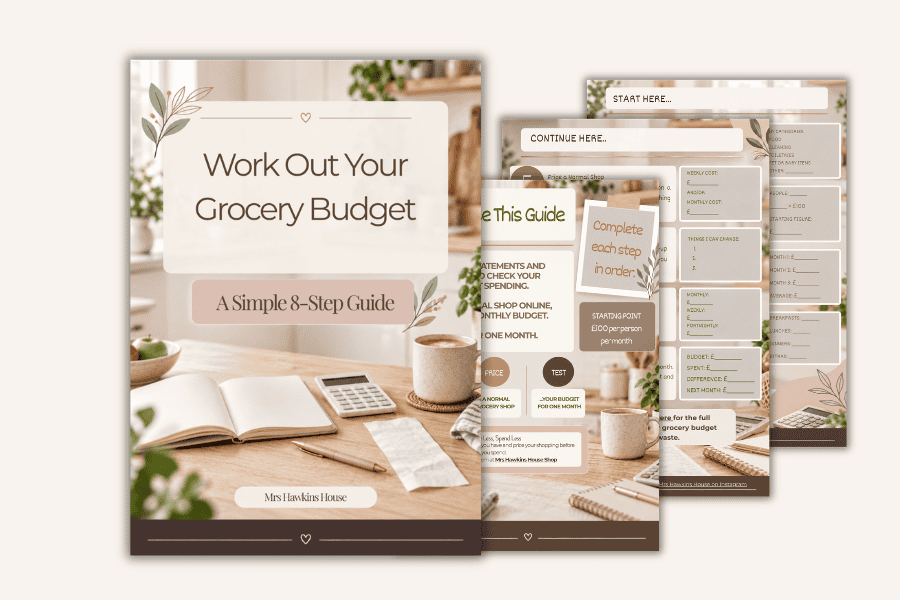
1. Decide What Your Grocery Budget Will Cover
First, decide which purchases will come from your grocery budget.
Some households use their budget for food only. Others include:
- Cleaning and laundry products
- Toiletries
- Pet food
- Baby products
- Special dietary products
- Small household essentials
Our grocery budget covers food, cleaning and laundry products, pet supplies and occasional household essentials. You may prefer to keep some of these costs in separate budget categories.
Choose your categories and use them throughout your first month. You can review them later once you understand how the budget works for your household.
2. Calculate Your Starting Figure
Multiply the number of people in your household by £100:
- 1 person: £100 per month
- 2 people: £200 per month
- 3 people: £300 per month
- 4 people: £400 per month
- 5 people: £500 per month
Continue adding £100 for each additional person.
Write this figure down as your starting point. You will compare it with your current spending, household needs and local food prices before choosing your final budget.
3. Analyse Your Current Spending
Check your banking app, statements and grocery receipts. If possible, look back over three months to calculate an average.
Include:
- Main supermarket shops
- Online grocery orders
- Top-up shops
- Convenience-store purchases
Only include the categories you chose in step one. For example, if pet food has its own budget, remove that cost from your grocery spending.
Pay attention to top-up shops. A quick £6 or £10 visit for milk and bread may feel small, but several extra trips can add a considerable amount to your monthly spending.
Look at the foods you regularly run out of. You may need to buy more bread, milk, fruit or packed-lunch supplies during your planned shop. You may also find purchases that have quietly become part of your routine.
This is your chance to understand your spending. Be honest with yourself and use the information to make practical changes.
Write down:
- Your average monthly grocery spending
- Approximately how much you spend on top-up shops
3.1 Grocery Costs Analysis Sample Table
Depending on whether you budget for your grocery spending weekly or monthly, use the relevant table below to see examples of how much it adds up to over a full year.
Then..
- Use these examples to calculate your own annual grocery spend.
- Compare this to your annual income to see that percentage is groceries are taking of your annual budget.
Weekly Grocery Spending
| Weekly grocery spending | Annual grocery spending |
|---|---|
| £100 | £5,200 |
| £150 | £7,800 |
| £200 | £10,400 |
| £250 | £13,000 |
Annual figures are calculated using 52 weeks.
Monthly Grocery Spending
| Monthly grocery spending | Annual grocery spending |
|---|---|
| £500 | £6,000 |
| £700 | £8,400 |
| £1,000 | £12,000 |
| £1,250 | £15,000 |
Annual figures are calculated using 12 months.
4. Analyse the Meals and Supplies You Need
Use a normal week to calculate how many meals your household prepares at home.
Consider:
- How often each person eats away from home
- Whether lunches are packed or bought
- Which meals everyone eats at home
- Regular takeaways or meals out
- Different work, school or university schedules
If people regularly eat elsewhere, base your shopping on the meals you actually provide.
Next, list the food and household essentials you buy regularly. Use simple categories such as:
- Protein
- Fruit and vegetables
- Dairy products or alternatives
- Cupboard and freezer staples
- Breakfast and lunch foods
- Snacks and treats
- Cooking essentials
- Non-food items included in your budget
This will show you what your grocery budget needs to provide each week.
Check What Your Shopping Will Cost
Use supermarket websites or apps to check current prices before deciding on your budget.
Create an online basket containing the food and household items you would normally need for one week. This gives you a realistic idea of what your regular shopping will cost.
To work out a weekly amount from a monthly budget, divide the monthly figure by 4.33.
For example:
£600 per month ÷ 4.33 = approximately £138 per week
You can also calculate a fortnightly amount if that suits the way you shop. Checking prices online helps you choose a figure based on the food your household uses and the prices you are currently paying.
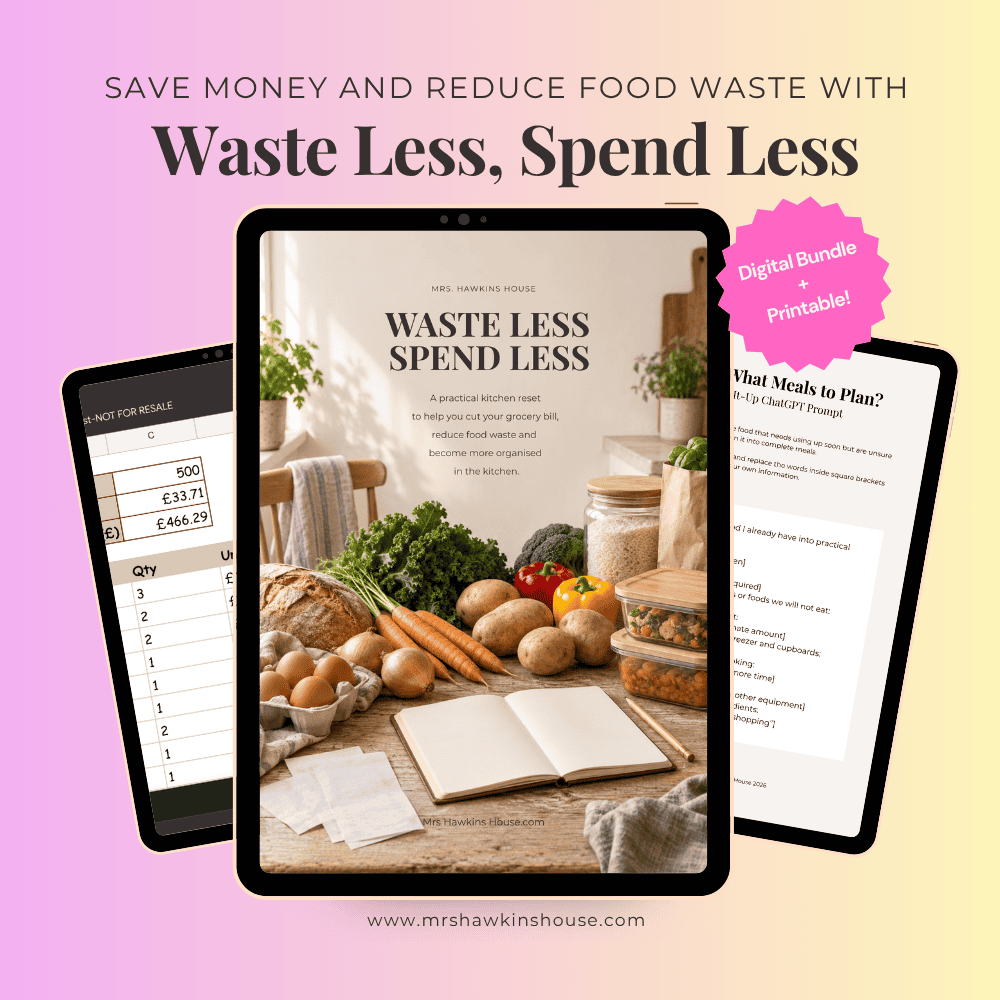
Price Your Shopping with Waste Less, Spend Less
The Waste Less, Spend Less system helps you check what you already have, plan the meals you need and price your shopping before spending.
It includes practical tools for food inventories, meal planning, shopping lists, price checking and tracking your receipts. Use it to create a clear shopping plan and make better use of the food you buy.
Get the Waste Less, Spend Less system here.
5. Make Your Grocery Spending Work Harder
Before choosing your final amount, look for places where your money could be used more efficiently.
Start with food waste. For one or two weeks, record what is thrown away. This may include:
- Fresh food going off
- Stale bread
- Portions left after meals
- Ingredients bought for one recipe
- Leftovers that remain uneaten
Then review your shopping habits:
- Are you buying more than your household uses?
- Could some products be changed to own-brand versions?
- Are top-up shops increasing your spending?
- Are you checking your fridge, freezer and cupboards before shopping?
- Would making certain foods at home suit your budget and available time?
Convenience foods can also be useful when they prevent takeaways, reduce food waste or make busy evenings easier. Choose the options that work for your household.
Include any genuine additional costs, such as dietary requirements or accessibility needs. Your budget should provide the food and supplies your household needs.
6. Choose Your Monthly Grocery Budget
You now know:
- What your grocery budget will cover
- What you currently spend
- How many meals you provide
- What your normal shopping costs
- Where you could spend more efficiently
An Example Grocery Budget
A household of five begins with the £500 starting figure. Their statements show that they currently spend around £800 per month.
They find that regular top-up shops and wasted fresh food are adding to their costs. They choose some own-brand products and improve their meal planning. They also allow extra money for one household member who follows a gluten-free diet.
They choose £600 as their first monthly grocery budget.
Choose an amount you can maintain. Leave some room for bulk buying, special offers and changes to your plans.
Once you have chosen your monthly figure, divide it into weekly or fortnightly amounts if that makes it easier to track.
7. Test Your Budget for One Month
Use your grocery budget for one full month and keep track of everything you spend.
Before each shop, check your fridge, freezer and cupboards. Plan the meals you need and write a shopping list.
At the end of the month, review:
- Your total grocery spending
- Any money remaining
- Foods you needed to buy more often
- Food left unused or wasted
- Extra grocery costs
- Household changes that affected spending
Use this information to choose your budget for the following month. You may keep the same amount or adjust it to suit your household.
How Much Should I Spend on Groceries Each Month?
Start with £100 per person per month as a working figure.
Compare this with your current spending, the number of meals you provide and the cost of your usual shopping. Include dietary needs, top-up spending and the household products covered by your grocery budget.
Choose a monthly amount, test it for one month and adjust it using what you learn.
The free Work Out Your Grocery Budget workbook will help you bring these figures together and calculate an amount based on the way your household shops, eats and lives.
For more help with grocery budgeting, meal planning and household finances, explore the other resources on Mrs Hawkins House and visit my YouTube channel.