13 No Spend Challenge Rules With FREE PDF Printable Trackers
Why Try a No Spend Challenge?
A no spend challenge is one of the simplest ways to take back control of your money. Whether you’re trying to save for Christmas, build an emergency fund or pay off that dreaded debt, a no spend challenge can be a great way to reset your money habits and refocus on your financial goals.
To be honest, a no spend challenge needs to be fairly strict. Otherwise, you won’t achieve what it’s really designed to do. To improve our finances, we first need to discover what’s really going on. We need to find out:
- Where the waste is in our spending.
- Whether our spending habits are actually quite sensible, but our income simply isn’t enough to comfortably cover our essential expenses.
- How much debt is affecting our ability to enjoy the money we work so hard to earn.
Once we understand the problem, we can start finding the right solution. We’re not aiming to make life difficult for the sake of it. However, sacrificing the little things, like your daily coffee or sweet treat, can help put larger expenses into perspective.
What do I mean by that? If saving on coffees and casual purchases makes a noticeable difference over the course of a month, imagine the life you could build if you gradually reduced larger expenses or finally got on top of the debts you’re currently carrying. A successful no spend challenge gently forces you to become more intentional with your money. Every pound has a purpose, and every purchase becomes a conscious decision rather than an unconscious habit.
Why Listen to Me?
Well, over the years I’ve completed several no spend challenges, including a no spend year, and I’ve learnt a few lessons that have stayed with me ever since. We need far less stuff than we think we do. We’re far more resourceful than we give ourselves credit for. And perhaps most importantly, we really can do hard things. In my case, I was a single parent when I did my no spend year. I paid off a tonne of debt and it completely transformed my life. You can read about it here if you like.
What We Will Cover
In this post we will cover the following:
- Set a Goal Before You Begin
- Understand Where Your Money Goes Before the Challenge Begins
- Write a Budget Before the Challenge Begins
- Track Your Progress During the No Spend Challenge
- Meal Plan & Reduce Food Waste
- Make Your Rules Fit Real Life
- Decide Your Non-Negotiables
- Stop Comparing Yourself
- Avoid Window Shopping & Scrolling Online
- Find Free Entertainment
- Protect Your Health
- Expect the Unexpected
- Celebrate the Wins
Let’s get started, but if you would like more helpful posts like this please sign up to my newsletter.
Before You Start
A little preparation makes all the difference. The people who stick with a no spend challenge successfully create a solid plan and stick to it. Finding an community online is a great way to get into the mindset of spending challenges’ You should join me over on TikTok, Instagram, Facebook or YouTube where you’ll find lots of lovely folks in the comments cheering each other on with their money goals.

1. Set A Goal Before You Begin
Rules matter very little without a clear goal being decided before your no spend challenge begins. Decide what it is you want to save for and, more importantly, why it matters to you.
Your goal might be:
• Building an emergency fund
• Saving for Christmas
• Paying for a family holiday
• Preparing for university costs
• Paying off debt
• Simply getting to the end of the month without running out of money
Whatever your goal is, write it down and decide exactly how much money you want to have saved by the end of the challenge.
For example, your goal might be to save £200 towards Christmas. Decide where you’ll keep that money, how you’ll save it and what you’re willing to cut back on to make it happen.
Take a moment to imagine how achieving that goal will feel. Then, whenever you’re tempted to spend £30 on something you really don’t need, remind yourself why you started. Having a clear purpose makes saying no to unnecessary spending much easier.
2.Understand Where Your Money Goes Before The Challenge Begins
Before changing your spending habits, take an honest look at where your money is currently going. Print your bank statements or open your banking app and spend a little time reviewing the last month or two. If you’ve got a few highlighters handy, even better.
Ask yourself:
• Which purchases surprised me?
• What had I forgotten I was paying for, such as unused subscriptions?
• Which purchases genuinely improved my life, and which were simply unnecessary?
Now separate your spending into three groups: essential spending, optional spending and wasted spending.
The optional and wasted spending is where your biggest opportunity to save money lies. Reduce the optional spending where you can and remove the wasteful spending altogether. You’ll probably be surprised how quickly those small savings begin to add up.
3.Write a Budget Before The Challenge Begins
A written budget gives every pound a purpose before the month even begins and drastically reduces decision fatigue around money. Give every penny of your income a job, whether that’s paying bills, buying groceries, building savings or giving to others.
I write a budget every single month without fail because it makes life so much easier. It allows me to plan for reality rather than reacting to it. For example, I save towards Christmas throughout the year instead of trying to find all the money in December.
Take an honest look at the month ahead, think about any upcoming expenses and build those into your budget before they arrive. Planning ahead will make your no spend challenge much easier to stick to.
4.Track Your Progress During The No Spend Challenge
Watching your savings grow is surprisingly motivating. Use the savings tracker to record the amounts you put aside each day. Tick off each successful day on your no spend challenge calendar and use the spending tracker to record where your money is going throughout the month.
By the end of the challenge, you may discover that you can comfortably reduce certain spending categories even further, helping you make even more progress towards your goals. Move the money you’ve saved into a separate savings account or cash envelope each week. Seeing your savings grow can become a game in itself and is one of the biggest motivators for staying on track.
5.Meal Plan & Reduce Food Waste
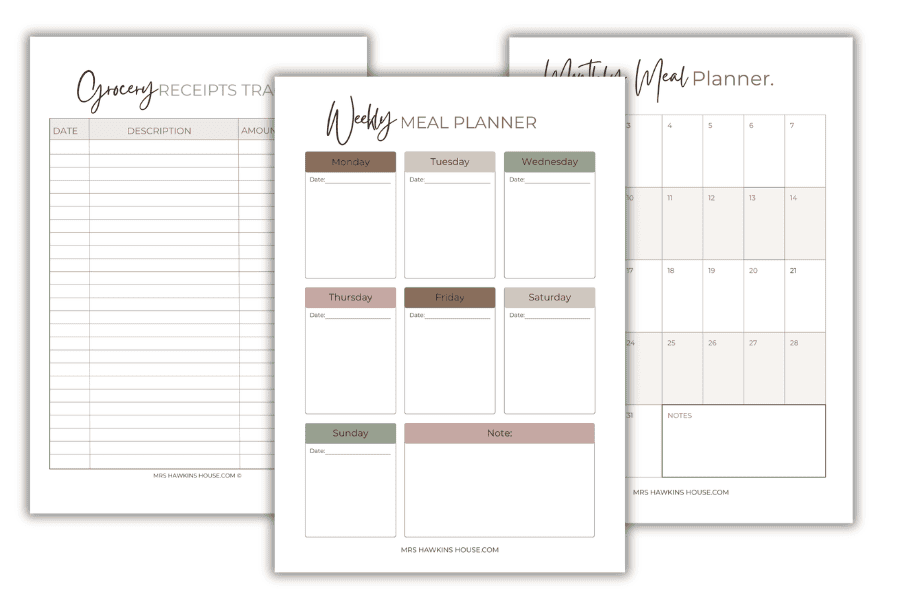
If you’d like a free meal planning system ( some of the pages are displayed in the image above), click here where you can download as many sheets as you like.
The cost of groceries and eating out is one of the largest household expenses for many families, second only to things like housing and childcare. The good news is that this is also one of the easiest areas to make meaningful savings.
Meal planning, simplifying the meals you cook, reducing food waste and cutting back on eating out can all have a huge impact on your grocery budget.
You don’t have to start buying the cheapest products to save money on food. This is far more about planning than it is about price. While shopping wisely certainly matters, a homemade dinner will almost always cost far less than an expensive takeaway from the drive-through.
It’s all about finding the right balance.
Here are a few simple ways to make meal planning work for you.
Take Inventory Before You Shop
Before writing your shopping list, open every cupboard, the fridge and the freezer.
You may already have enough ingredients for several meals. Using what you already own is one of the quickest ways to reduce your grocery bill and avoid unnecessary food waste.
Simplify Your Meals
I used to put a lot of pressure on myself to cook exciting new recipes every week. These days, our meals are much simpler, and honestly, life is much easier because of it.
We rotate a collection of family favourites week after week and save the more adventurous cooking for the occasional weekend when we actually have time to enjoy it.
I still love trying new recipes, but I no longer expect myself to do that every week. Keeping meals simple saves money, reduces stress and makes meal planning much quicker.
Cook Once, Eat Twice
This one is fairly self-explanatory.
Double a recipe one evening and cook enough for tomorrow’s dinner at the same time. Pack away tomorrow’s portion before everyone starts eating so it’s clear there aren’t any second helpings that evening.
It saves money on ingredients, reduces food waste and gives you a well-earned night off from cooking.
Plan For Busy Days
If you already know there will be evenings when you’re too busy or too tired to cook, plan for them in advance.
Either use leftovers from the previous night or keep a few simple freezer meals tucked away for those hectic days. A homemade fakeaway or frozen pizza is still much cheaper than an unplanned takeaway and will help protect your progress throughout the challenge.
6.Make Your Rules Fit Real Life
This is where many people come unstuck. They try to follow someone else’s no spend challenge instead of creating one that works for their own family. The reality is that no two households are the same.
For example, if you care for someone with additional needs, there may be routines or expenses that other people simply don’t understand. Those routines might be essential for your family, even if someone else would see them as unnecessary. The same applies to shift workers, families with young children, people who work from home or anyone managing long-term health conditions.
Your no spend challenge should fit around your real life, not someone else’s. Setting realistic rules from the beginning gives you a much better chance of completing the challenge successfully and making genuine progress towards your financial goals.
7.Decide Your Non-Negotiables
Every family has expenses that are simply non-negotiable.
For us, we spend a lot of time on the road. No matter how well we prepare, we know there will occasionally be money spent on food or drinks while we’re out. Rather than feeling guilty about that, we’ve built it into our budget by allowing ourselves lunch out on a Friday.
Because we’ve planned for it, it doesn’t derail our challenge. In fact, it encourages us to prepare lunches and drinks for the rest of the week so that Friday feels like a small treat rather than an impulse purchase.
For your family, non-negotiables might include:
• A gym membership
• Free-range chicken
• A television package
• Comfortable shoes
• Putting the heating on a little more during the winter
You get the idea.
Removing something from your budget simply because someone else says you should isn’t always the right decision.
Being accountable to yourself means being honest about what genuinely matters in your household. Decide what is non-negotiable, what you can reduce and what you can remove altogether. That way, you’ll build a challenge that is both realistic and sustainable.
8.Stop Comparing Yourself
Social media is full of people claiming they’ve spent absolutely nothing for months. Maybe they have, and maybe they haven’t. If following other people’s no spend challenges inspires you, then that’s brilliant. Keep following those accounts and use them as motivation.
However, if you find yourself feeling guilty, discouraged or as though you’re somehow “failing”, it may be time to step back for a while. Remember, you’re only seeing a snapshot of someone else’s life. You don’t know their circumstances, priorities or financial situation.
Your no spend challenge isn’t a competition with anyone else. If your finances are healthier than they were last month, you’re making progress, and that’s something to be proud of.
9.Avoid Window Shopping & Scrolling Online
Browsing the shops “just for a look” takes far more willpower than most of us realise. If you’re trying to spend less, it’s much easier to remove temptation than to rely on self-control every single day. The same applies online. A few minutes of scrolling can quickly turn into an impulse purchase you hadn’t planned on making.
If shopping is one of your weaknesses, here are a few ideas that really help:
• Unsubscribe from marketing emails.
• Mute or unfollow shopping accounts on social media.
• Remove your saved payment details from websites you find difficult to resist.
• Delete shopping apps from your phone.
• Batch your essential online shopping. If you need to place an Amazon order, for example, keep a running list and order everything together. Once you’ve finished, remove the app again if you know you’ll be tempted to browse.
The easier you make good decisions, the less willpower you’ll need to use.
10.Find Free Entertainment
Saving money shouldn’t mean sitting at home feeling miserable or telling yourself you can’t enjoy life until your finances improve. Some of our favourite family days have cost very little.
Think about things like:
• Picnics
• Local walks
• Libraries
• Beaches
• Museums
• Community events
• Baking together
• Board games
• Eating dinner in the garden
• Watching a favourite series together
One of the lovely things about a no spend challenge is that it reminds us just how many enjoyable moments don’t require us to spend money at all. Sometimes the memories we treasure most are the ones that cost the least.
11.Protect Your Health
Never put your health at risk simply to complete a no spend challenge. Replace the worn-out shoes.Collect your prescription.Go to the dentist.Do whatever you genuinely need to do to look after your physical and mental wellbeing.
Over the years I’ve read some shocking advice online from people taking part in no spend challenges. I’ve seen people brag about eating food that was well past its safe use-by date or refusing to put the heating on when they could comfortably afford to do so. That isn’t sensible budgeting.
There are families who genuinely have no choice because they’re facing real financial hardship, and that’s an entirely different and very sad situation. If you have the means to look after yourself safely, then please do. Financial wellbeing and physical wellbeing go hand in hand.
12.Expect the Unexpected
Life has a habit of throwing us the occasional curveball. The washing machine might break. The car might need repairs. School might send home another letter asking for money. Whatever it is, we’ll deal with it as best we can, just as we always do.
An unexpected expense doesn’t mean your no spend challenge has failed. In fact, if you’ve already managed to save a little money during your challenge, you may find that you’re now able to cover that expense without reaching for a credit card. Last month, that money might already have been spent on things you didn’t really need.
To me, that’s a win. It’s also a reminder that every unnecessary purchase we avoid today gives us more security when life inevitably surprises us tomorrow. Adjust your budget, deal with what’s important and then carry on. Progress is far more important than perfection.
13.Celebrate the Wins
When you reach the end of your challenge, take a moment to celebrate what you’ve achieved. You’ll notice there’s a section called ‘Reward’ on the No Spend Challenge Month Tracker. If you’ve reached your goal and you’ve budgeted for a small treat, go and enjoy it completely guilt-free. More importantly, appreciate how far you’ve come.
Maybe this is the first time you’ve ever completed a no spend challenge. Maybe you’ve saved £100 towards Christmas. Maybe you’ve managed to deal with an unexpected expense without worrying because you had money set aside. Or perhaps you’ve simply learnt more about your spending habits than you ever knew before.
Whatever your achievement, don’t rush past it. One of the most transformative things about a no spend challenge is proving to yourself that you’re capable of changing your habits. That’s a lesson that will continue to benefit you long after the challenge has ended.
Frequently Asked Questions
What Can You Buy During A No Spend Challenge?
Essential spending such as groceries, household bills, fuel, healthcare and other planned necessities usually continues as normal. The aim isn’t to avoid essential spending altogether. It’s about cutting back on unnecessary spending and seeing just how much progress you can make by becoming more intentional with your money.
How Long Should A No Spend Challenge Last?
A month is the most popular option because it’s long enough to build new habits without feeling overwhelming. If a whole month feels like too much, start with a weekend or a single week and build from there.
You may also have heard of people taking on a no spend year. I’ve completed one myself, so if you’d like to see what that looked like in practice, I’ve linked that article for you to read after you’ve finished this one.
What If I Break My No Spend Challenge?
Keep going. Dust yourself off and don’t beat yourself up about it. One unplanned purchase doesn’t undo all of your hard work. Learn from it, make any adjustments you need to and carry on.
Consistency over time matters far more than perfection. And if you’d like the occasional gentle reminder and plenty of practical budgeting ideas, don’t forget to sign up for my newsletter.
Final Thoughts
The best no spend challenge isn’t necessarily the strictest one. It’s the one you can actually finish. Choose the ideas that suit your family and leave behind the ones that don’t. Your circumstances are unique, and your challenge should reflect that.
Remember that every thoughtful spending decision moves you one step closer to your financial goals. Whether you’re saving for Christmas, building an emergency fund, paying off debt or simply trying to feel a little more in control of your money, every small step counts.