…so you can begin saving money now!
Download the free Work Out Your Grocery Budget guide here.
Learning how to set and manage a grocery budget properly is one of the main reasons we were able to pay off a substantial amount of debt.
Grocery spending happens every week, which means small changes quickly add up. Saving £50 per month gives you £600 over a year. Saving £100 per month gives you £1,200. That money can be used for debt repayments, savings or other household costs.
The important part is choosing a grocery budget based on the way your household actually lives. You need to know what the budget will cover, what you currently spend and how much your usual shopping costs.
I have created a free Work Out Your Grocery Budget guide to help you complete each step and record your figures.
Download the free Work Out Your Grocery Budget guide here.
What We Will Cover
- Decide what your grocery budget will cover
- Calculate a starting figure
- Check your current grocery spending
- Count the meals your household needs
- Price a normal grocery shop
- Find practical ways to save
- Choose your grocery budget
- Test it for one month
What You Will Need
Before you begin, gather:
- Your banking app or bank statements
- Any grocery receipts you have kept
- A calculator
- Access to supermarket websites or apps
- The free Work Out Your Grocery Budget guide
If possible, look back over three months. This will give you a more useful picture of your normal spending.
1. Decide What Your Grocery Budget Will Cover
Start by deciding exactly what will come from your grocery budget.
Some households use their grocery budget for food only. Others include:
- Cleaning and laundry products
- Toiletries
- Pet food
- Baby products
- Special dietary products
- Small household essentials
In our house, the grocery budget covers food, cleaning and laundry products, pet supplies and occasional household essentials.
Choose the categories that make sense for your household. Write them in your workbook and use the same categories while you test your budget.
This matters because two households may both say they spend £600 per month on groceries while paying for completely different things from that amount.
2. Calculate Your Starting Figure
If you have no idea where to begin, I use £100 per person per month as a starting figure.
For example:
- One person: £100 per month
- Two people: £200 per month
- Three people: £300 per month
- Four people: £400 per month
- Five people: £500 per month
Write down the number of people in your household and multiply it by £100.
This gives you a figure to begin working with. You will adjust it after checking your spending, household needs and current grocery prices.
Your household may need more because of dietary requirements, local prices, pets or the number of meals eaten at home. That is completely fine. The purpose of this step is to put a first figure on the page.
3. Check Your Current Grocery Spending
Open your banking app or look through your statements and receipts.
Write down everything spent on:
- Main supermarket shops
- Online grocery orders
- Convenience stores
- Top-up shops
- Any other purchases covered by your grocery budget
Complete this for the last three months if possible. Add up each month separately, then calculate your average monthly spending.
Pay particular attention to top-up shops. A quick visit for milk and bread can easily become a £10 or £20 spend. Several of these trips during the month can make a significant difference to your total.
Look at your figures honestly and calmly. You are gathering information that will help you make a workable plan.
4. Count the Meals Your Household Needs
Think about a normal week in your household.
How many breakfasts, lunches and dinners do you provide? Include packed lunches, snacks and meals prepared for work or university.
Also consider:
- Meals eaten at work or school
- Regular evenings when somebody eats elsewhere
- Takeaways or meals out
- Different work patterns
- Dietary requirements
- Visitors who regularly eat with you
If five people live in your house, that does not automatically mean you prepare every meal for five people.
Write down the number of breakfasts, lunches and dinners your grocery shopping usually needs to provide. This gives you a clearer idea of the amount of food your household actually uses.
5. Price a Normal Grocery Shop
Use a supermarket website or app to build a normal grocery shop.
Add the food and household items you regularly need. Include enough food for the meals you counted in the previous step.
You do not need to place the order. You are using the online basket to check current prices and calculate a realistic cost.
Include:
- Your usual proteins
- Fruit and vegetables
- Dairy products or alternatives
- Breakfast and lunch foods
- Cupboard and freezer staples
- Snacks and treats
- Cleaning products or toiletries included in your budget
Write down the total cost in your guide.
You can price a weekly shop, a monthly shop or both. Use the shopping pattern that makes the most sense for your household.
6. Find Practical Ways to Save
Now look at where your grocery spending could work harder.
Check for:
- Fresh food regularly being thrown away
- Frequent top-up shops
- Products you could buy in a different size
- Foods you could switch to own-brand
- Ingredients bought for one recipe and left unused
- Food already available in your freezer or cupboards
Choose changes that suit your time, health and household.
Convenience food can be useful when it prevents a takeaway or helps you provide an easy meal on a busy evening. Homemade food can save money when you have the time and ingredients available.
Write down a few changes that feel realistic. These are the changes you will test during your first month.
7. Choose Your Grocery Budget
You now have the information needed to choose your budget.
You know:
- What the budget must cover
- What you currently spend
- How many meals you provide
- What a normal shop costs
- Where you can make practical savings
Choose a figure you can maintain.
For example, a household may currently spend £800 per month. After checking their receipts, they find that food waste and repeated top-up shops are increasing their spending. Their online price check shows that they can cover their usual needs for around £600.
They may choose £650 as their first budget, giving them some room for price changes and unexpected purchases.
Write down your monthly amount. You can also divide it into weekly or fortnightly amounts if that is how you prefer to shop and track your spending.
8. Test Your Budget for One Month
Use your new grocery budget for one full month.
Record every grocery purchase, including small top-up shops. Keep your receipts or update the workbook after each shop.
Before shopping:
- Check your fridge
- Check your freezer and cupboards
- Plan the meals you need
- Write a shopping list
- Check prices where possible
At the end of the month, compare your budget with the amount you spent.
Record:
- Your original budget
- Your total spending
- The difference between the two figures
- Foods you regularly ran out of
- Food left unused
- Extra household costs
- The amount you want to use next month
Your first figure gives you something practical to test. Use what you learn to set the following month’s budget.
How a Grocery Budget Helps You Pay Off Debt
A grocery budget gives you control over one of your household’s biggest regular expenses.
When we were paying off debt, reducing wasted food and planning our grocery spending released money that could be moved towards our financial goals.
A saving of £25 per week adds up to £1,300 over a year. A saving of £50 per week adds up to £2,600.
This is why I take grocery budgeting seriously. It is not about making every meal as cheap as possible. It is about deciding where your money will go before it disappears through unplanned shops, unused food and habits you have stopped noticing.
Download the Free Grocery Budget Guide
The free Work Out Your Grocery Budget guide takes you through all eight steps and gives you spaces to record your figures.
Use it alongside this article to:
- Check your current spending
- Calculate your starting figure
- Price your normal shopping
- Choose your first grocery budget
- Review the results after one month
Download the free Work Out Your Grocery Budget guide here.
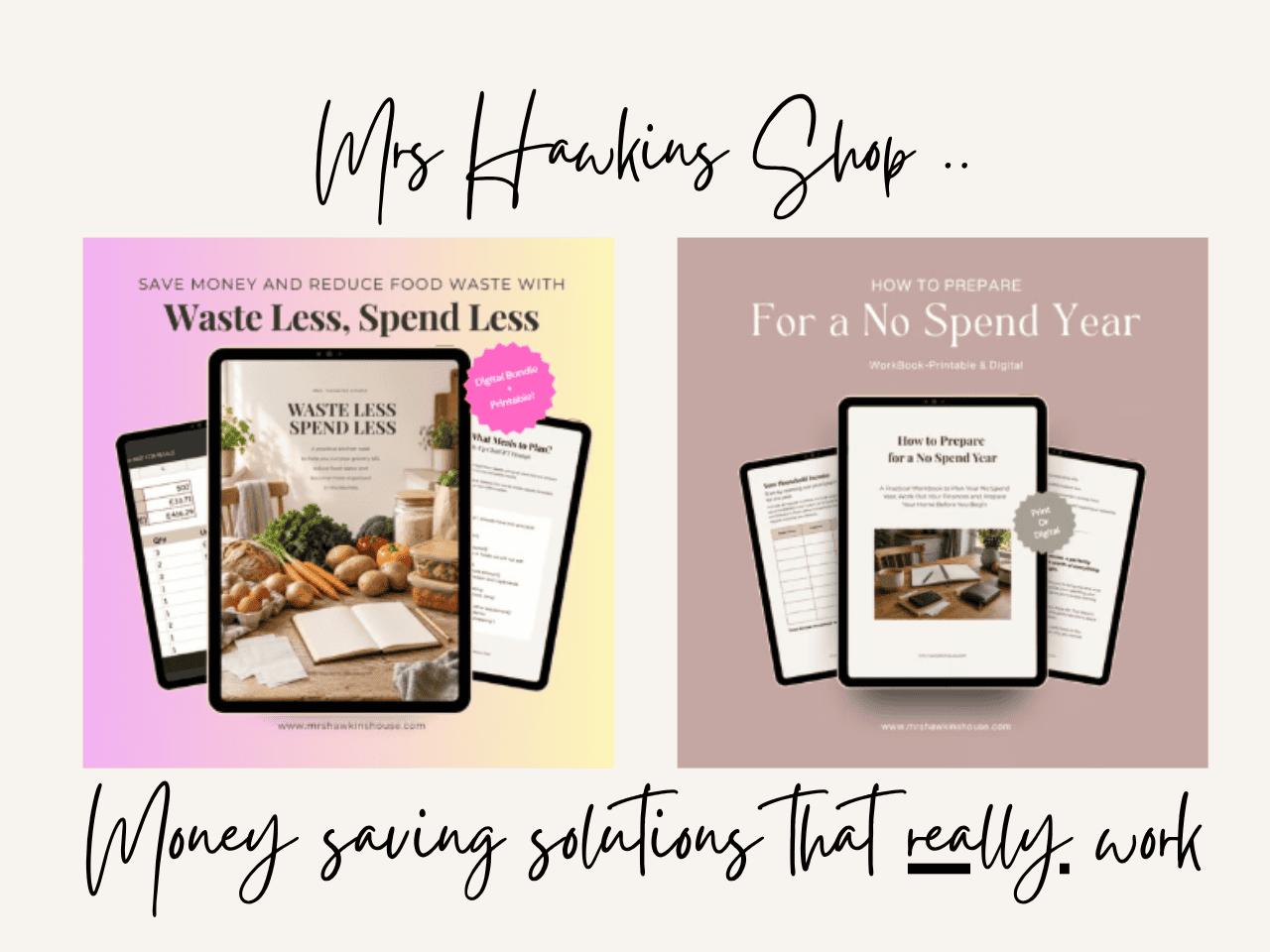
For more support with meal planning, food inventories and pricing your shopping before you spend, explore the complete Waste Less, Spend Less system in the Mrs Hawkins House Shop.
Shop Here