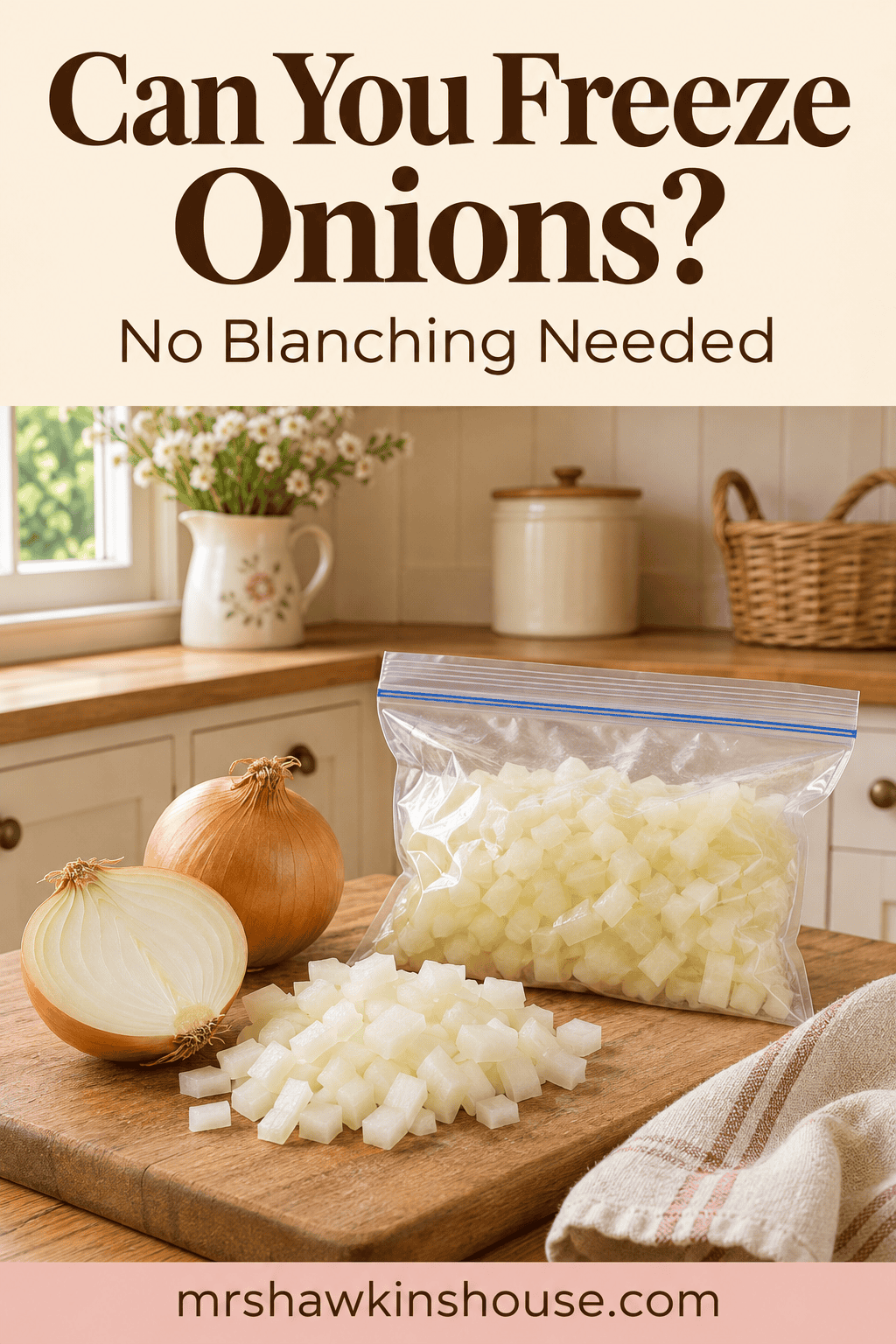
Having chopped onions ready in the freezer saves a little preparation when you’re making dinner. It’s also a great way to store a glut of onions.
Can You Freeze Onions?
Yes, you can freeze raw, chopped onions without blanching. Peel, wash, chop and dry them, then seal in freezer bags and freeze.
Freezing changes their texture, so use them in cooked dishes such as soups, stews, curries and sauces. Keep fresh onions for salads and sandwiches when you want that crisp texture.
Do You Need To Blanch Onions?
No. Chopped bulb onions are one of the vegetables you can freeze without blanching. The National Center for Home Food Preservation specifically recommends this option for diced onions. There is no boiling or cooling step needed for the method below.
How To Freeze Raw Onions
- Choose firm onions in good condition. Peel off the papery skin, trim the ends and wash thoroughly under running water.
- Chop into small, evenly sized pieces, roughly 6–12 mm across. Pat away excess water with a clean kitchen towel.
- Divide into freezer bags in the amounts you normally use. If you usually start a recipe with one onion, pack one chopped onion per bag.
- Squeeze out the air, seal and label with the date and quantity.
- Flatten the bags into a thin layer and freeze. Once frozen, stack them together to save space.
Use bags intended for freezing, with a secure seal. You can also use freezer-safe containers with tight-fitting lids; leave a little space at the top.
Flash Freezing Onions
If you prefer to take out a handful at a time, freeze the pieces separately before bagging them.
Spread the chopped, dry onion in one layer on a lined baking tray. Put it into the freezer until the pieces are solid. Start checking after an hour; larger pieces or a fuller freezer may take longer.
Transfer promptly into freezer bags, squeeze out the air, seal and date. This helps prevent the onion freezing into one large lump.
How Long Do Frozen Onions Last?
Plan to use raw, chopped onions within a few months for the best quality. This is the onion-specific recommendation from the National Center for Home Food Preservation.
Label each bag and use the oldest first. Freezer storage recommendations describe quality, rather than a date when properly frozen food suddenly becomes unsafe.
How To Use Frozen Onions
Add them straight from frozen to a saucepan for vegetable soup, stew or sauce. For recipes that start with frying onions, add a small portion to the pan and cook until softened, letting the extra moisture evaporate before continuing.
They also work in cooked mince dishes such as chilli con carne. There is usually no need to defrost chopped onions first.
Can You Freeze Whole Onions?
Whole onions can be frozen using a different preparation method, but chopping first is more practical for everyday cooking. You can portion them before freezing and put them straight into your recipe.
How Do You Know If Frozen Onions Are Bad?
Softer onion after defrosting is expected. Dry patches from freezer burn affect quality and do not, on their own, mean the onion is unsafe.
Discard onions with mould, unusual slime or a rotten smell. Freezing will not make spoiled onions usable. If they have thawed and been left warm, appearance and smell alone cannot tell you whether they are safe.
For more vegetables to prepare for the freezer, see Vegetables You Can Freeze.

